What a Deep Cleaning Actually Includes, Room by Room
A deep cleaning goes past the daily surfaces and into the buildup that regular visits are not built to reach.
October 20, 2026 · 4 min read
A reset, not just a bigger regular visit
A regular cleaning keeps a home where it already is. Counters get wiped, floors get vacuumed and mopped, bathrooms get scrubbed, and the surfaces you touch every day stay fresh. A deep cleaning does all of that and then goes after the things a regular visit is not built to reach: the grease on a range hood, the film behind a faucet, the dust that has settled along baseboards and on top of cabinets over months. At Dust Buster the idea is extra attention for buildup and hard-to-reach areas, a true reset you can feel the moment you walk through the door.
It also takes longer, and that is the point. Nobody can scrub grout lines, wipe every blade of a ceiling fan and detail an oven in the same hour they spend on a routine visit. The extra time is where the difference comes from.
The kitchen
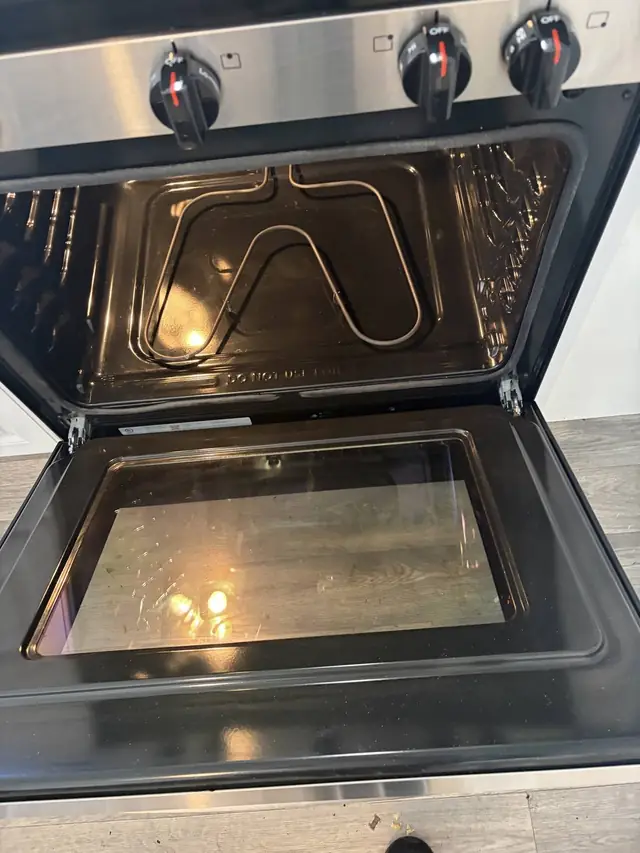
The kitchen is usually where a deep cleaning spends the most time, because it collects the most grime. Inside the oven, baked-on grease builds up in layers and the glass door slowly goes cloudy. A deep clean works through that until the door is clear again and the interior is wiped down. The same level of attention goes to the range hood and cooktop, the fronts and handles of the cabinets, the backsplash, the sink and the fixtures around it, and the small appliances that live on the counter.
Then come the places people forget. The tops of the refrigerator and the cabinets. The edges of the floor where a mop never quite reaches. Light fixtures, where a filament bulb or a glass shade can hold a surprising amount of dust and kitchen film. A cleaner on a stepstool with a damp cloth finds a lot up there.
Bathrooms
Bathrooms get the slow, detailed treatment. Soap scum on glass and tile, mineral spots around faucets, grout lines that have darkened, the base of the toilet, the edge of the sink and the cabinet under it. Mirrors and chrome are polished until they stop streaking. Exhaust fan covers collect a thick layer of dust, and wiping one makes a visible difference. Showers and tubs are scrubbed corner by corner instead of surface by surface.
Bedrooms and living areas
Bedrooms look clean long before they actually are. Dust sits on ceiling fans, window sills, headboards, picture frames and the tops of door frames. A deep clean works from high to low, so whatever falls gets picked up on the way down. Baseboards are wiped by hand, vents are dusted, and floors come last: vacuumed right up to the edges and mopped wherever the surface is hard.
Windows, window tracks and glass doors are part of the job too, along with floor care throughout. If your couch, area rugs or wall-to-wall carpet need it, upholstery and carpet cleaning can be part of the visit.
The detail work that makes the difference
- Ceiling fan blades, light fixtures and the dust that collects on both
- Baseboards, door frames, window sills and the tops of cabinets
- Inside the oven, plus the range hood and appliance exteriors
- Cabinet fronts and handles, switch plates and door handles
- Floor edges, corners and the strip along the wall
- Grout, faucets, glass and chrome in the bathrooms
- Upholstery, couches and carpets or rugs when they are part of the job
One customer, Tim S., put the result this way: he noticed the difference as soon as he walked in, and described a "very clean and fresh smell not chemical". That is a fair test of a deep cleaning. You should be able to tell the moment you open the door.
How it differs from a regular visit
A regular visit follows a repeatable routine. The same rooms, the same surfaces, the same level of detail, week after week or month after month. It maintains a standard. A deep cleaning resets it. It is open-ended where buildup is concerned, so the cleaner stays on a stubborn spot until it is dealt with instead of moving on to keep the schedule.
That is also why many households start with a deep cleaning and then move to a recurring schedule. Terra F. wrote that they were first hired for a deep clean, and her words were "Initially they were hired for a deep clean. That was awesome." Once the baseline is reset, the regular visits are lighter and the home stays there.
When to book one
- Before you start a recurring cleaning schedule, so every later visit begins from a clean baseline
- Before or after hosting a holiday or a big family gathering
- At a season change, when windows, tracks and baseboards have collected a few months of dust
- After a long gap since the last thorough cleaning, or when you have simply stopped keeping up
- After a renovation or repair, when fine dust has settled on every flat surface
- Before a move, a sale or a listing photo session
If you are unsure which one fits, a deep cleaning or a regular visit, describe the home and what is bothering you. Dust Buster is family-owned, has been cleaning Long Island homes since 2013, and has an owner on every job. The team brings its own supplies and equipment, and every quote is free and personal.
To learn more, see the Deep Cleaning page, or call or text Dust Buster at (631) 505-2098. Se habla español.
Dust Buster Cleaning Inc, (631) 505-2098
Call (631) 505-2098More articles
Move-Out Cleaning Checklist for Long Island Homes
An empty home shows every mark, so a move-out clean has to cover more than the surfaces you used every day.
Weekly, Every Other Week or Monthly: Which Schedule?
The right schedule depends less on the size of your house than on how many people, pets and routines pass through it.